
Du'a for breaking the fast (iftar)
When breaking the fast we say “Dhahabaz-zama'u, wabtallatil-'uruqu, wa thabatal-ajru in sha' Allah” — “the thirst has gone, the veins are moist, and the reward is certain, if Allah wills”.
Teacher review under way.
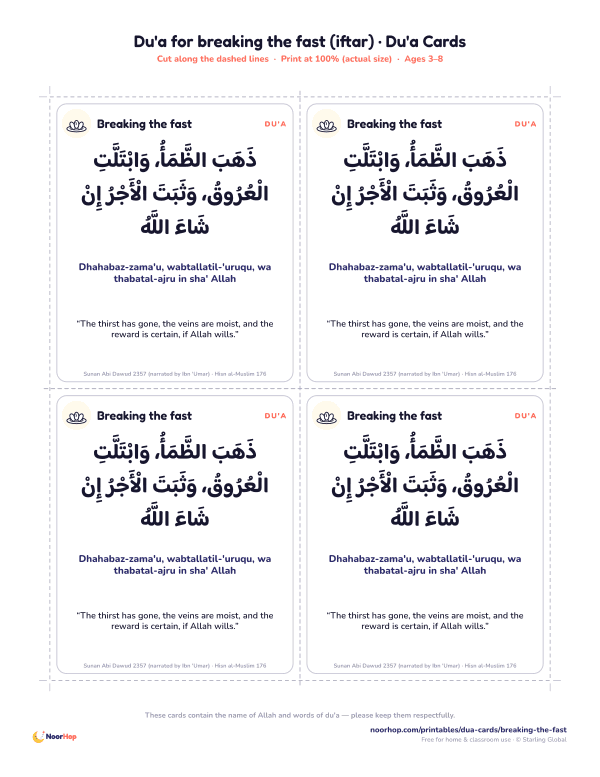
ذَهَبَ الظَّمَأُ، وَابْتَلَّتِ الْعُرُوقُ، وَثَبَتَ الْأَجْرُ إِنْ شَاءَ اللَّهُ
Dhahabaz-zama'u, wabtallatil-'uruqu, wa thabatal-ajru in sha' Allah
“The thirst has gone, the veins are moist, and the reward is certain, if Allah wills.”
Good to know: Children are not required to fast. Little ones can still join the iftar du'a with the family.
What it means
“My thirst is gone, my body feels fresh, and Allah will reward me, inshaAllah!”
When we say it
At iftar, once we have broken the fast — we say “Bismillah” before the first date or sip.
Learn the word: InshaAllah
How to teach it in 3 steps
Step 1: Children who are practising a short fast can say it too — it's a proud moment.
Step 2: Act it out: “thirst gone” (pat throat), “veins wet” (wiggle fingers), “reward” (hands open).
Step 3: Say it together as a family at iftar every evening of Ramadan.
Questions parents ask
Do we say it before or after the first date?
We say “Bismillah” and break the fast, then say this du'a — its words describe the thirst having gone. Families differ on details — ask your teacher.
What about “Allahumma laka sumtu…”?
Many families say it as well, but hadith scholars grade its chain as weak, so we teach the du'a above first. Ask your teacher.
Sources: Sunan Abi Dawud 2357 (narrated by Ibn 'Umar) · Hisn al-Muslim 176
Families and madhhabs differ on some details — ask your teacher.
Keep learning
Iftar Dua Card for Kids
4 breaking the fast du'a cards on one sheet: the Arabic on its own line, then the transliteration and the meaning.
Open →Du'a for Every Moment
Tap a moment to hear its du'a, track what your child knows, pick a du'a of the week and print personalised cards.
Open →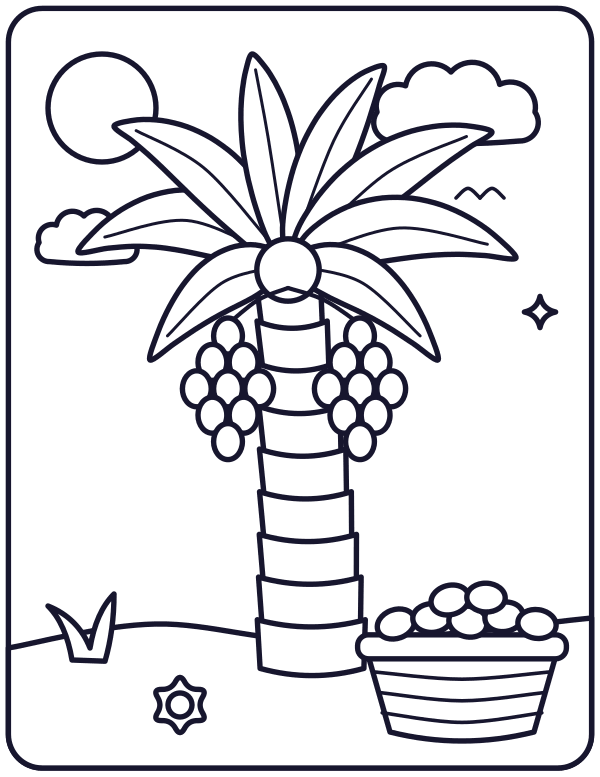
Date Palm
A tall date palm full of sweet dates, with a basket ready for iftar.
Open →25 sunnah habits & good manners for kids (with songs)
Table, home, friends, family and nature — 25 little sunnahs with songs to match.
Open →Iftar and suhoor with little ones
Routines, a sunset countdown and helper jobs by age — with a printable chart.
Open →