The Arabic alphabet for kids
The Arabic alphabet has 28 letters, written and read from right to left. Most letters join the next one and change shape a little as they do, dots tell look-alike letters apart, and small vowel marks (harakat) add the sounds a, i and u. Tap any letter below to hear it.
Teacher review under way.
Quick facts for parents
28 letters
From Alif (ا) to Ya (ي). Some charts show 29 because they count hamza (ء) as a letter.
Right to left
Words, lines and books start on the right. Numbers are the exception — they're written left to right.
Letters hold hands
Most letters join the letter after them. Six never do: ا د ذ ر ز و.
Dots make the difference
Many letters share one shape and differ only by their dots: ب ت ث, ج ح خ, س ش.
No capital letters
Instead, each letter changes shape a little at the start, middle and end of a word.
Vowels are little marks
Fatha, kasra and damma sit above or below a letter and add a, i or u.
Learn the harakat →
All 28 letters at a glance
- 1اAlifcarries a, i or u — and the long aaأَرْنَبarnab · rabbit
- 2بBab as in ballبَطَّةbattah · duck
- 3تTat as in tapتُفَّاحَةtuffahah · apple
- 4ثThath as in thinkثَعْلَبtha'lab · fox
- 5جJeemj as in jamجَمَلjamal · camel
- 6حHaaa strong, breathy h from the throatحُوتhoot · whale
- 7خKhaakh — the ch in Scottish 'loch'خَرُوفkharoof · sheep
- 8دDaald as in dogدُبّdubb · bear
- 9ذDhaalth as in thisذُرَةdhurah · corn
- 10رRaa quick, tapped rرُمَّانrumman · pomegranate
- 11زZayz as in zooزَيْتُونzaytoon · olives
- 12سSeens as in sunسَمَكَةsamakah · fish
- 13شSheensh as in shipشَمْسshams · sun
- 14صSaada heavy sصَابُونsaboon · soap
- 15ضDaada heavy dضِفْدَعdifda' · frog
- 16طTaaa heavy tطَائِرَةta'irah · aeroplane
- 17ظDhaaa heavy th, as in 'this'ظَرْفdharf · envelope
- 18عAyna squeeze in the throat (no English match)عِنَبinab · grapes
- 19غGhayna gargly gh, like a French rغَزَالghazal · gazelle
- 20فFaf as in fishفِيلfeel · elephant
- 21قQaafa deep k from the back of the throatقَمَرqamar · moon
- 22كKaafk as in kiteكُرَةkurah · ball
- 23لLaaml as in lampلَيْمُونlaymoon · lemon
- 24مMeemm as in moonمَوْزmawz · banana
- 25نNoonn as in nestنَجْمnajm · star
- 26هHaa soft h, as in hatهِلَالhilal · crescent moon
- 27وWaww as in waterوَرْدَةwardah · rose
- 28يYay as in yellowيَدyad · hand
How to teach the Arabic alphabet by age
Listen and play
- Tap the letters above together and copy the sounds. Little and often beats long lessons.
- Start with letters that mean something to your child: the first letter of their name, ب for Bismillah, م for masjid.
- No pencils yet. Make letters from play-dough, draw them in sand, or trace big ones with a finger.
- Stop while it's still fun — a few minutes and a few letters a week is plenty.
Sounds and shapes
- Teach the sound as well as the name: ب is called Ba and says b.
- Learn look-alike letters together — same shape, different dots — and count the dots out loud.
- Trace with a finger first, then a crayon. Trace with Noori and the colouring pages help here.
- Play Alif Ba Pop: hear a letter, then find it among the bubbles.
Join and read
- Learn each letter's start, middle and end shapes.
- Add the harakat and read ba, bi, bu across the whole alphabet.
- Blend syllables into short words such as qamar (moon) and jamal (camel).
- Read a few lines every day, and use the chart for a quick weekly check.
Practise and play
Alif Ba Pop
Trace with Noori
Letter colouring pages
Alphabet chart
Harakat (short vowels)
Arabic numbers 0–10
Letter tracing worksheets
Questions parents ask
Is it 28 or 29 letters?
Most children's alphabets teach 28. Charts that show 29 add hamza (ء), which children usually learn as a small sign that sits on alif, waw or ya — or on its own.
Is this the alphabet of the Qur'an?
Yes. The Qur'an is written with these letters, and printed copies (mushafs) usually show every vowel mark — which is why children learn the harakat early.
Why are letter names spelled differently in different books?
There's no single English spelling: Ba, Baa and Ba' are all ب. On NoorHop, Taa always means ط and Haa always means ح, so they never clash with ت (Ta) and ه (Ha).
Which letters are hardest for English speakers?
The throat letters ح خ ع غ and the heavy letters ص ض ط ظ ق, because English has no match for them. Listen, copy, and don't worry about perfection at 4.
What order should we learn them in?
The usual order (Alif, Ba, Ta…) works well, because look-alike letters sit next to each other. Starting with the letters in your child's name is a lovely warm-up.
Keep learning
Du'a for knowledge
Allah, please help me learn more and more.
Open →Alif Ba Pop
Pop the right letter!
Open →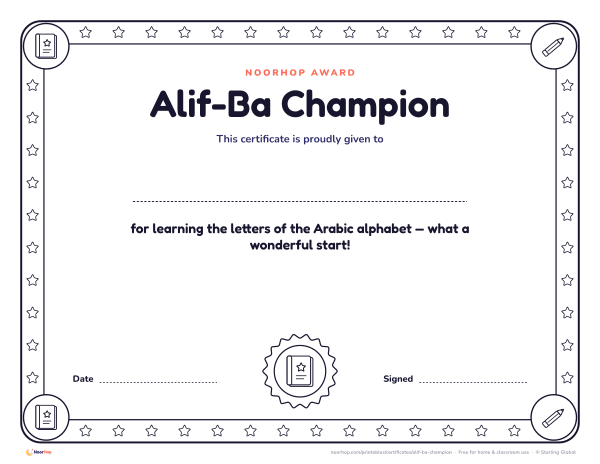
Alif-Ba Champion Certificate for Kids
The Alif-Ba Champion certificate says “well done” for learning the letters of the Arabic alphabet — what a wonderful start.
Open →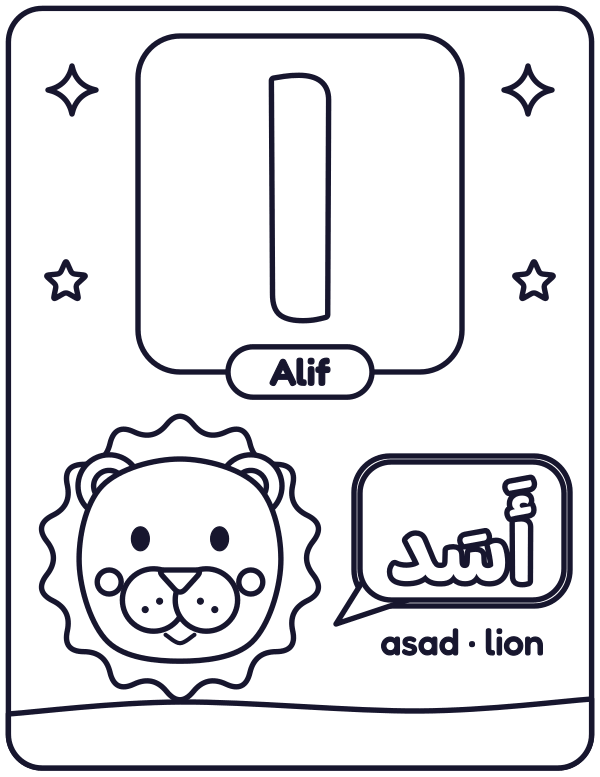
Arabic Letter Alif (ا)
Alif is for asad — a big, friendly lion!
Open →Arabic letter Alif (ا)
Carries a, i or u — and the long aa. Hear it, see its shapes and learn words like arnab (rabbit).
Open →Du'a for Every Moment
Tap a moment to hear its du'a, track what your child knows, pick a du'a of the week and print personalised cards.
Open →