How to teach a du'a in 5 steps
Children don't learn du'as from a list. They learn them by saying the same words at the same moment, day after day, next to someone they love. That's the whole method.
- Pick one moment, one du'a. Choose a moment that happens every day, ideally several times. Mealtimes are perfect — that's why Bismillah before eating is the classic first du'a. One at a time is plenty.
- Say it yourself, out loud, every time. Your child needs to hear it many times before they say it. Say it a little slower and clearer than usual, and don't ask them to repeat it yet. You are the recording they learn from.
- Say it together, in chunks. Break a longer du'a into pieces of two or three words. You say a piece; they echo it. After a few days, pause before the last word and let them finish it. Soon they lead and you echo.
- Sing it or play it. Rhythm carries words into memory. Our songs match real moments: Every Bite's a Gift for meals, Road Trip Dua for the car and Brand-New Clothes for getting dressed. If your family prefers no music, chant it to a clap.
- Put a card where it happens. The eating card on the table, the sleeping card by the bed, the travel card in the car. A card at your child's eye level does the reminding, so you don't have to. Our free du'a cards print six to a sheet. They carry Allah's name, so keep them somewhere clean and respectful.
Move on when a du'a is easy, not when it is perfect. The old ones don't disappear — they carry on at their moment while a new one joins.
Try this: “You said it all by yourself! Allah heard every word.” Praise the try, not the pronunciation.
Let them talk to Allah in their own words, too
Memorised du'as are a treasure. But du'a is also simply asking Allah for something, in any language. Let your child hear you do it: “O Allah, please help Grandma feel better.” Then invite them: “What would you like to ask Allah for?” Silly answers are fine. A child who asks Allah for a red bike today is learning that Allah is always listening.
Which du'as first? A suggested order by age
Go at your child's pace. This is a gentle starting point — your family or teacher may suggest a different order, and that's fine.
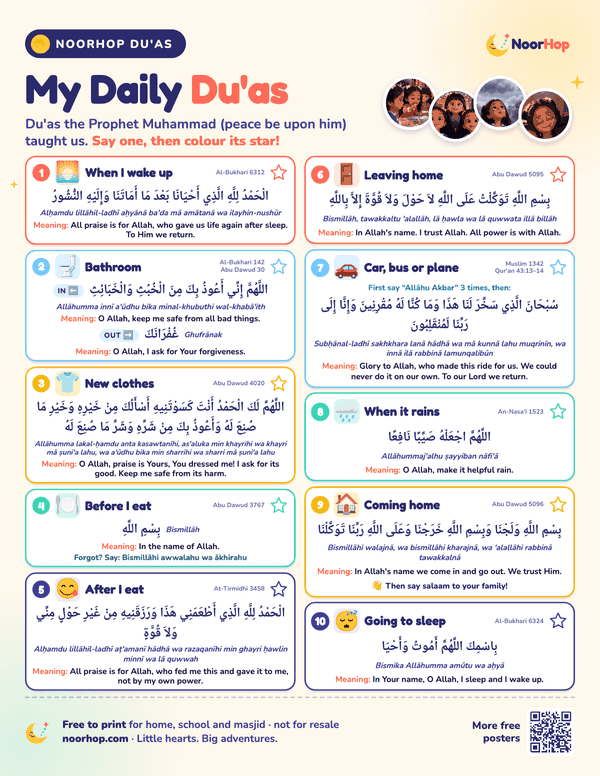
- Ages 2–3: Bismillah before food, Alhamdulillah after food and after a sneeze, and Assalamu alaikum. Single words they hear all day.
- Ages 4–5: the bedtime du'a, the full du'a after eating, leaving home, new clothes, the reply to a sneeze and the du'a when it rains.
- Ages 6–8: longer du'as such as travelling, waking up, entering home and the masjid — plus du'as for big feelings, for learning and for parents.
Morning and getting dressed
The waking-up du'a thanks Allah for a brand-new day. Tie it to opening the curtains: curtains open, du'a, big stretch. For the first few weeks, just say it softly while your child wakes up. New outfits have their own du'a — the one for new clothes is perfect for Eid and new school shoes. Once mornings feel steady, add the short du'as for going to the toilet and looking in the mirror.
Eating and drinking
Mealtimes give you the most practice: three meals and a few snacks, every day. Make Bismillah the starting signal — nobody takes a bite until someone says it — and let your child be the “Bismillah leader”. Finish with the du'a after eating, starting with just “Alhamdulillah” for little ones.
- Forgot? There is a du'a for remembering Bismillah halfway through. Teach it as a happy fix, never a telling-off.
- Drinks count too. Bismillah before, Alhamdulillah after. Sit, Sip, Smile turns it into a song.
Home, travel and coming back
Doorways are natural reminders. Put the leaving-home du'a card at child height by the front door and say it while shoes go on. The travel du'a is longer, so learn it a chunk at a time as the seatbelts click — Road Trip Dua helps. Coming back, say the du'a for entering home and a big salaam to whoever is inside. On masjid days, add the du'a for entering the masjid at the door.
Sneezes, greetings and thank-yous
These are tiny conversations, and children love the back-and-forth. After a sneeze we say “Alhamdulillah”, and whoever hears it replies with a du'a. Practise with pretend sneezes — it always gets a giggle. The same goes for salaam (the Salaam Song helps), JazakAllahu khayran for thank you, and InshaAllah for plans. The What do we say? game practises exactly these moments.
Rain, lovely things and big feelings
When it rains, stand at the window together and say the du'a for rain, then ask Allah for something in your own words. When your child spots a rainbow or a new baby, teach the du'a for seeing something lovely, or a simple SubhanAllah. For big feelings, the du'a for when you feel angry gives them words while they calm down. Teach it on a calm day first, not in the middle of a meltdown.
Bedtime
Bedtime is when children are slow, close and listening. Make the du'a before sleeping the very last words before lights out, every night, in the same soft voice. Little ones can add “Thank you, Allah, for…” and name one good thing from their day. Older children can add the du'a for parents — a sweet thing to hear at the end of a long day.
Du'as you make for them
Children also learn by overhearing you make du'a for them. Say it softly by the bed: their name, and something good you're asking Allah for. Du'a for Every Moment lets you print a card sheet with your child's name, and has a section of du'as that parents make for their children.